

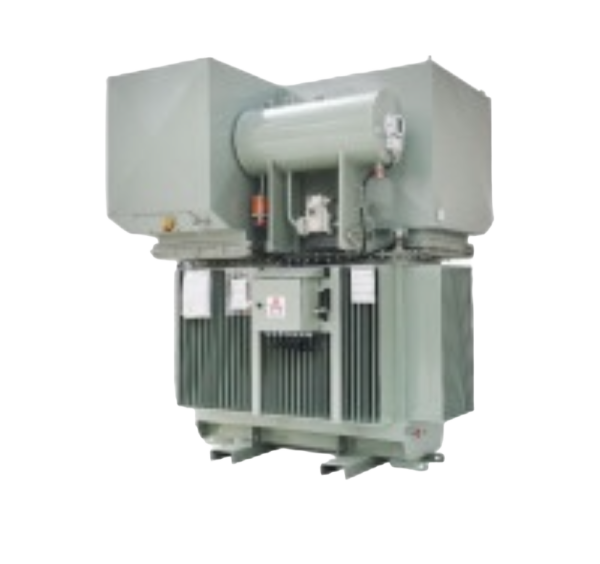
GROUNDING TRANSFORMERS
When a three-phase system lacks a neutral point, a grounding transformer is used to ground isolated systems and create a neutral point.
A grounding transformer can have a zig-zag connection, star-delta connection, or open-delta connection. By providing low impedance in the phase-to-ground path, it ensures that the system’s neutral voltage remains at the ground voltage level and provides a source for zero-sequence current. It limits the magnitude of transient overvoltages that occur when a ground arc fault occurs for any reason. It provides a measuring point for measuring fault currents and serves under unbalanced load conditions.
Power systems operate under variable and complex voltages. While maintenance is meticulous in power systems, short-circuit faults cannot be prevented. The use of a grounding transformer distributes the potential in the event of a fault.
Grounding transformers are inductive devices and do not carry an active load.
Grounding transformers operate for short periods of time and can have one or two windings. They operate unidirectionally. They only experience no-load losses outside of fault conditions. They are low-cost and offer high mechanical and thermal resistance in short-circuit conditions.